
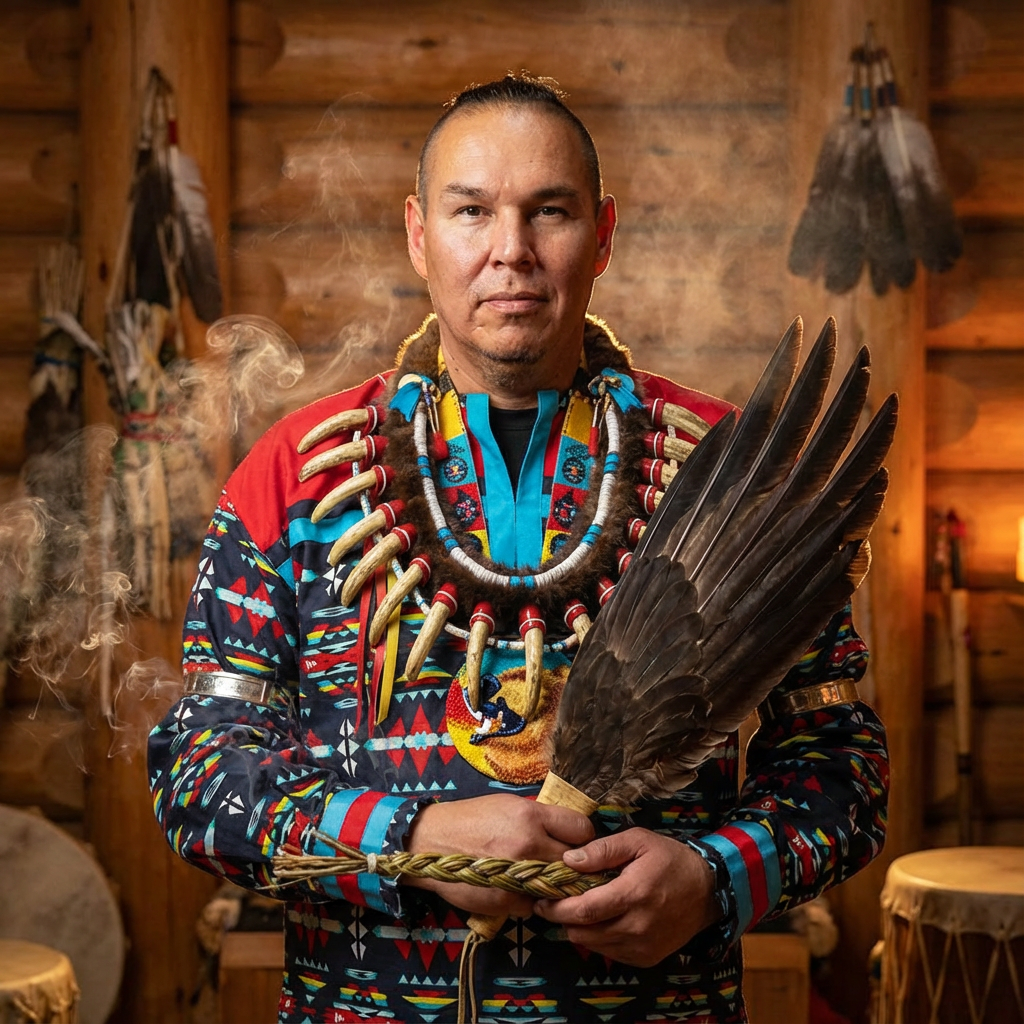
Kitsiksíksimatsimmo!
The Story of 49 Design
About Me
My family's stories were never written down. They were passed from one person to the next, told and retold by people I'm proud to come from. At the heart of all of them is my great grandmother Margaret, whose roots run deep into Niitsitapi history.
Margaret's father was Charlie Davis. He was the grandson of Rainy Chief, who signed Treaty 7, and the son of Falling Over A Bank (note: my non cultural family members will correct this to say that DW Davis is Charlie's father, but Charlie never knew DW, and I have all the records that show he lived with Falling Over A Bank his entire childhood and learned all of his traditional ways from him- including receiving his chieftainship as his hereditary descendant. In Blackfoot law, that means Falling Over A Bank was his father, something Rosie talked about extensively). Her mother was Rosie Davis, granddaughter of Chief Iron Pipe, daughter of Double Gun Woman, and a pivotal figure in the Matokiks Women's Society. That is the lineage I carry, and I carry it with pride.
Some of my earliest memories live in Margaret's kitchen. That room was an archive of memory, the place where our history was kept alive. I would sit and listen while she talked about her parents, about everything her family had lived through, and about the quiet, careful work of holding on to who you are when the world keeps asking you to be someone else.
She told me about her mother, Rosie, my great great grandmother, who was the first in our family sent to an Indian Residential School. Those schools were built to erase children like her. Rosie walked in carrying the strength of Double Gun Woman, and she walked out transformed rather than broken, the way so many Indigenous women did.
She told me about Charlie too. He inherited leadership from his father and his grandfather before him, and he understood it as a responsibility, never just a title. For him it was about protecting his community and keeping our culture alive in a world that kept trying to push it aside.
These stories are my inheritance. As a Two-Spirit, autistic person, I see myself in them. I recognize the same pattern of survival, the same gift for finding strength in spaces that were never built for us and turning every limit into an opening.
Margaret had this big, full belly laugh, a sound that held whole histories inside it. She taught me that our stories are not defined by what we are up against, but by our extraordinary ability to imagine ourselves anew. Every generation carries the wisdom of the one before, and the thread never breaks.
That is what I am doing now. Building this business is not just business to me. It is the same work my family has always done, making a way where there was no way. The same spirit that helped Rainy Chief negotiate Treaty 7, that carried Rosie through the residential school system, that guided Charlie as he led with diplomacy, that spirit lives in me.
Our history is not a list of names and dates. It is alive, breathing, and still unfolding. And in every choice I make, in every challenge I move through, I still hear my ancestors, steady and encouraging, reminding me where I come from and how much strength runs through me.
About the Company
Growing up, I noticed what was missing. Indigenous creativity was nowhere I looked. Our designs, so vibrant and intricate, were absent from television, from magazine spreads, from the everyday world around me. That absence was never just visual. It was one more attempt to shrink the depth and complexity of Indigenous art down to nothing.
My grandmothers were extraordinary beadworkers. Their hands moved like storytellers, making pieces that sat at the center of our tribe's ceremonial life. Every stitch was a conversation, every design a living story carried through careful, deliberate work. They showed me that our art was never meant to be boxed in. It was meant to breathe, to grow, to keep transforming.
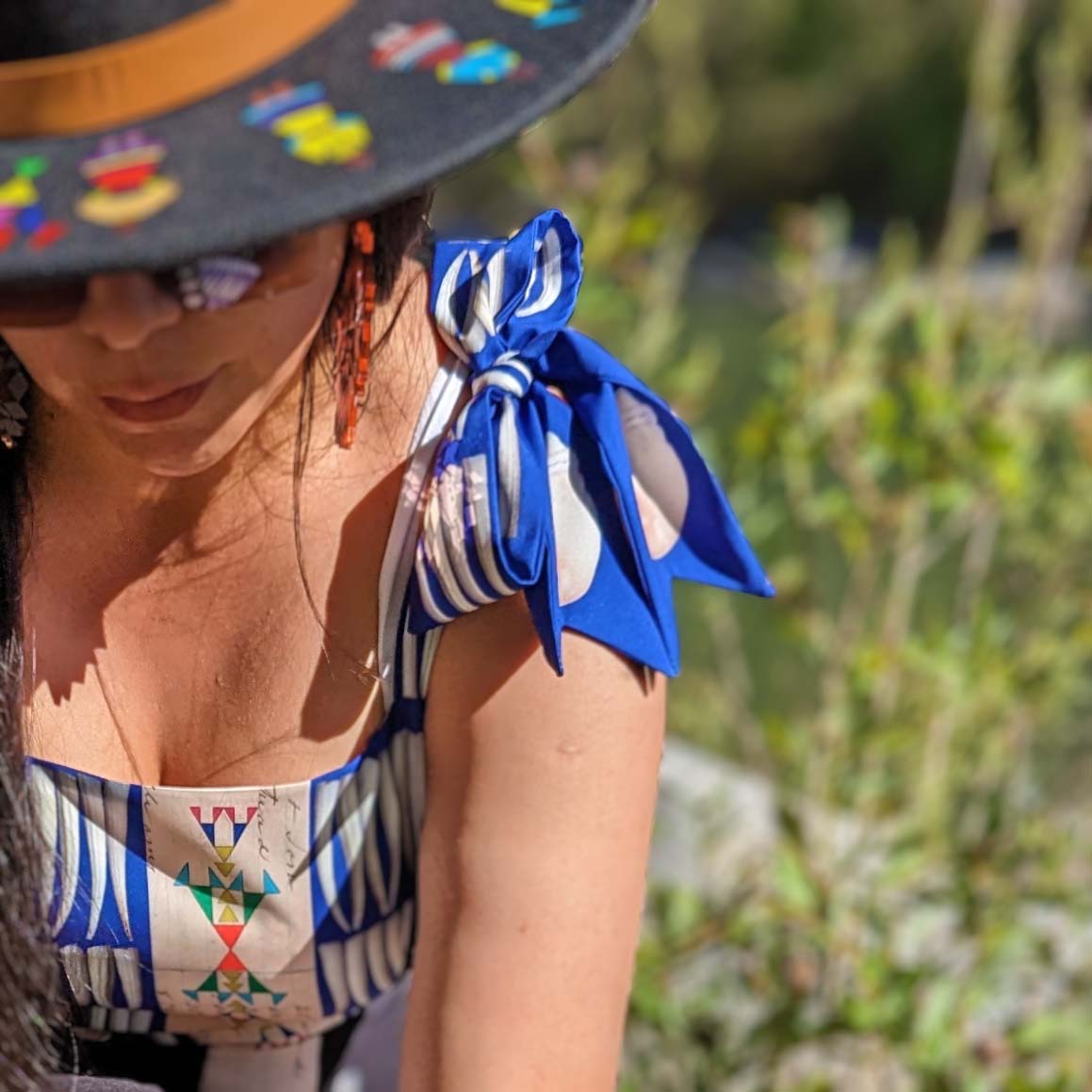
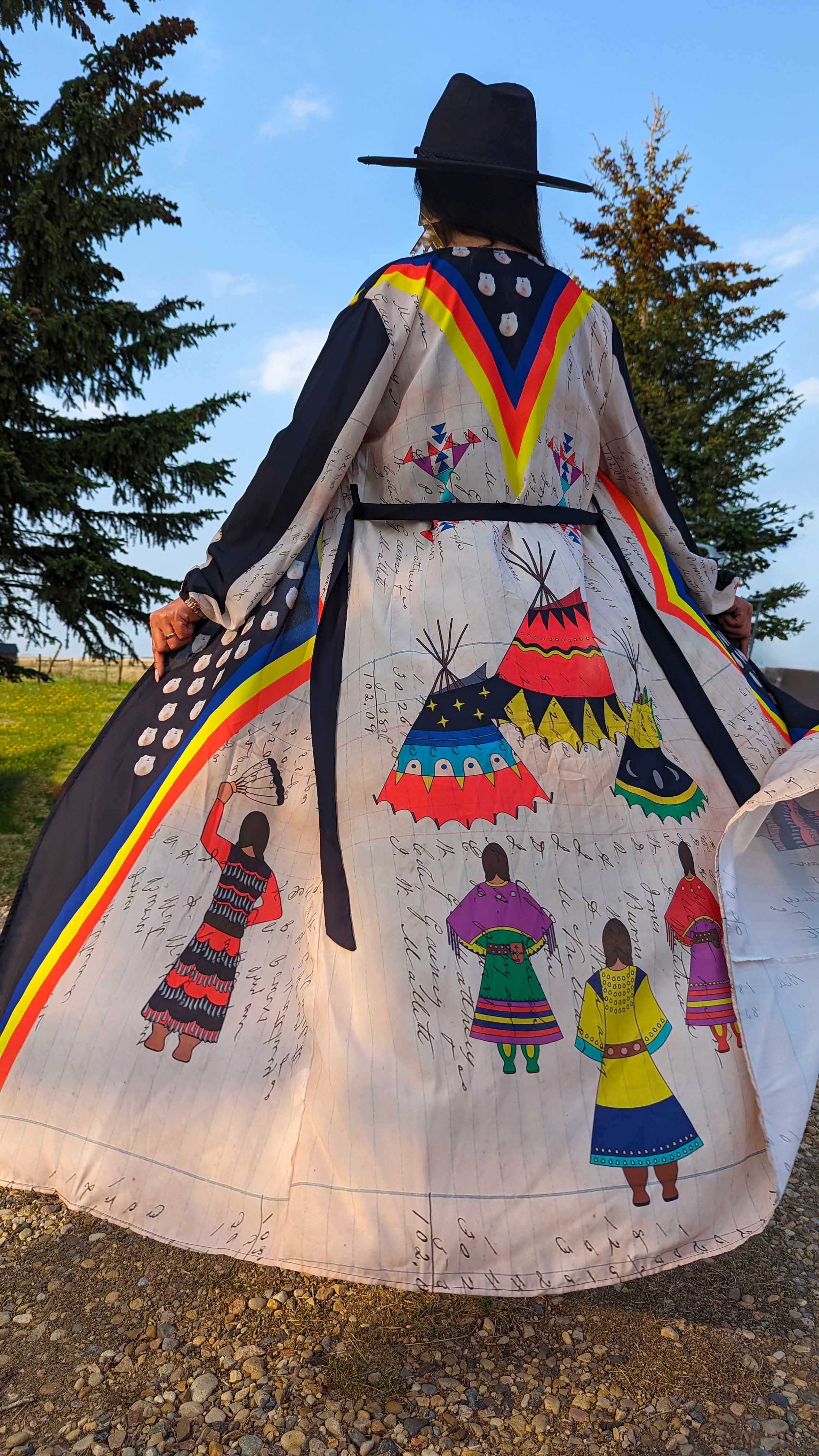
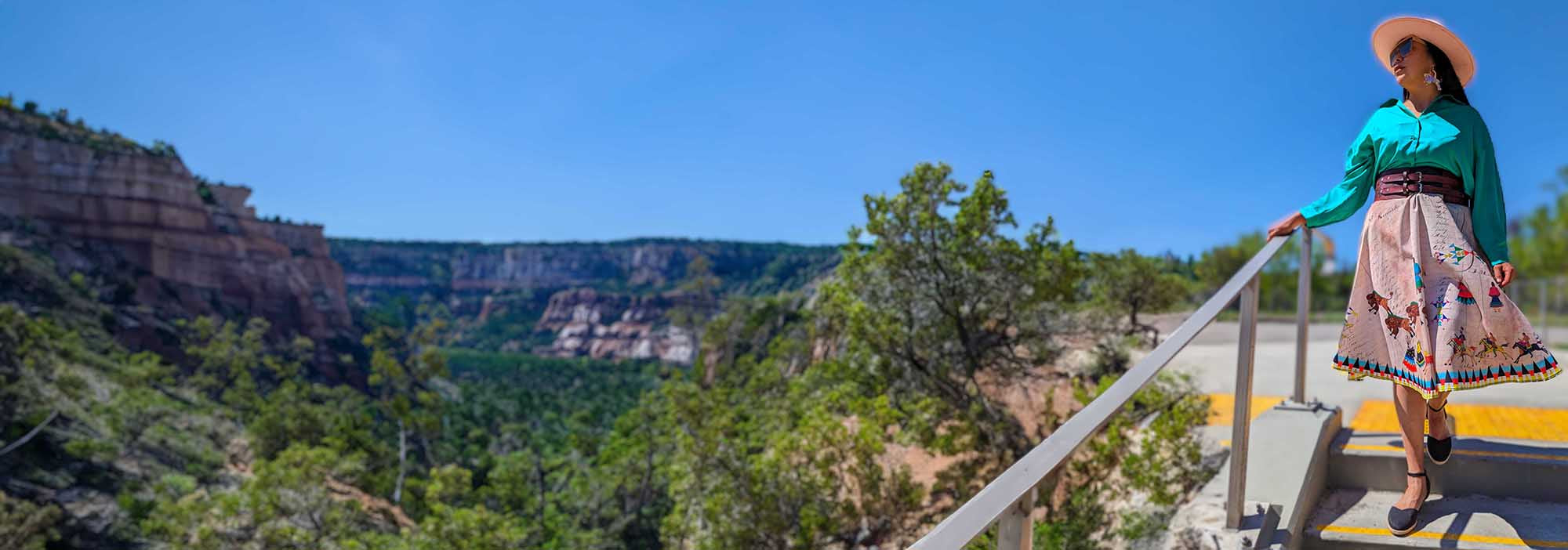
49 Design grew out of that understanding. The vision is simple: bring Indigenous design into everyday life through apparel, home goods, footwear, fabric, and more. We are not just making products. We are continuing a conversation that has been going for generations, reimagining how Indigenous creativity can live in the world.
That work has taken us all across North America, to powwows, gatherings, events, and councils. Every trip mapped a different kind of landscape, a territory of possibility, and traced the quiet lines of cultural continuity that connect all of it.
For us, design is never only about lines and colors. It is a language of memory, a conversation between tradition and innovation. Every collection starts with a story. Sometimes it is a memory an elder passed down, sometimes a piece of a ceremonial tradition, sometimes a quiet moment of reflection.
We are not a manufacturing company in the usual sense. Apart from our handmade section, which features pieces we make in house or that local Indigenous artisans create, we are strictly a design company. That is not a limitation. It is a deliberate act of creative sovereignty.
Commerce is not a betrayal of culture. It is another landscape of resilience, another path of survival. Our manufacturing partnerships are carefully chosen collaborations, never disconnections from our cultural core. Each piece begins with a story, a memory, or a rite of passage that we translate into a design all its own.
When people wear our work, they are not just buying a product. They are stepping into a story, a story of survival, of beauty, of cultural continuity that runs deep. Every collection we make carries that story forward, blending tradition and innovation to celebrate Indigenous culture in every detail.
Our entrepreneurship is an act of love. Love for our cultures, our stories, and the extraordinary resilience that has always defined Indigenous experience. We are not preserving culture as something frozen behind glass. We are proving that culture is alive, that it breathes, that it can wear itself proudly in the world, on bodies, in homes, across the same landscapes that once tried to erase us.
Every design is an act of resistance. Every product says that Indigenous creativity cannot be contained or diminished. We push back on the idea that Indigenous design is historical or static, and with every collection we prove that our creativity is contemporary, inventive, and endlessly transformative.
In the end, 49 Design is more than a company. It is a living archive, a cultural conversation, a continuous act of storytelling. We are not just making designs. We are making visibility, showing the world the depth and complexity of Indigenous artistic expression.
Our story continues, one design at a time.
About our Team
You can measure time by the people who share your space. In 2020, when we opened Rainy Chief Trading Post, our flagship store named for the ancestor who signed Treaty 7, the morning light caught more than the displays. It caught the faces of our team, each person carrying stories that reach back through generations.
Our team is mostly Indigenous, and they move through these spaces with an understanding that goes well beyond retail. They carry the memory of grandmothers who beaded late into the night, of aunties who taught them to find beauty in the smallest details, of ancestors who knew that commerce and culture were never meant to live apart.
When we opened our second 49 Design location in Edmonton in 2021, we weren't just growing a business. We were opening new ground, guided by people who understand exactly what it means to represent Indigenous creativity in contemporary spaces. Every display is the result of real collaboration, of stories shared across the design table, of an idea slowly becoming something you can hold.
The 49 Design Academy grew out of that same understanding, that our responsibility goes further than commerce. In both locations, our instructors are artists and knowledge keepers in their own right, and they guide students through the careful work of traditional crafting. Watch their hands move someone through the rhythm of beadwork or the measurements of a ribbon skirt and you'll see we are doing more than teaching a craft. We are passing on cultural knowledge.
Some of our team carry residential school histories in their families. Others are first generation entrepreneurs, breaking new ground while holding tight to ancestral teachings. Together they create a place where Indigenous creativity flourishes on its own terms, where every interaction becomes a chance for connection and understanding.
In the quiet before we open, when the light comes through the windows and catches the displays just right, I watch the team get ready for the day. Two people run our wholesale division, building relationships that stretch far past business. Four more handle the digital side with the same care our ancestors gave to keeping communities connected, watching over our E-commerce Made to Order site. Everyone brings their own perspective to the work we share. Our store teams meet our fans and customers face to face, building bridges and offering the warmth our people have always been known for.
Our retail spaces hold products that come from deep cultural understanding and real attention to detail. The team treats curation not as a task but as a ceremony. Every piece is chosen with intention, every display arranged to tell stories that span generations. We are not just filling shelves. We are filling the empty spaces history left behind, creating presence where there was once absence.
These spaces hold more than inventory. They hold the dreams and determination of a team that understands how much Indigenous representation matters in contemporary design. Every student who makes their first ribbon skirt, every entrepreneur who finds a new way to express culture through commerce, every visitor curious enough to engage with Indigenous design becomes part of our growing story.
In the steady hum of an ordinary day, our team moves with purpose and pride. They are knowledge keepers, story carriers, dream weavers, working to make sure Indigenous creativity keeps thriving in a world that once tried to silence it. Every morning, as they get ready to open our doors, they carry forward the teachings of those who came before us, building futures where Indigenous design can speak freely, proudly, and without limits.
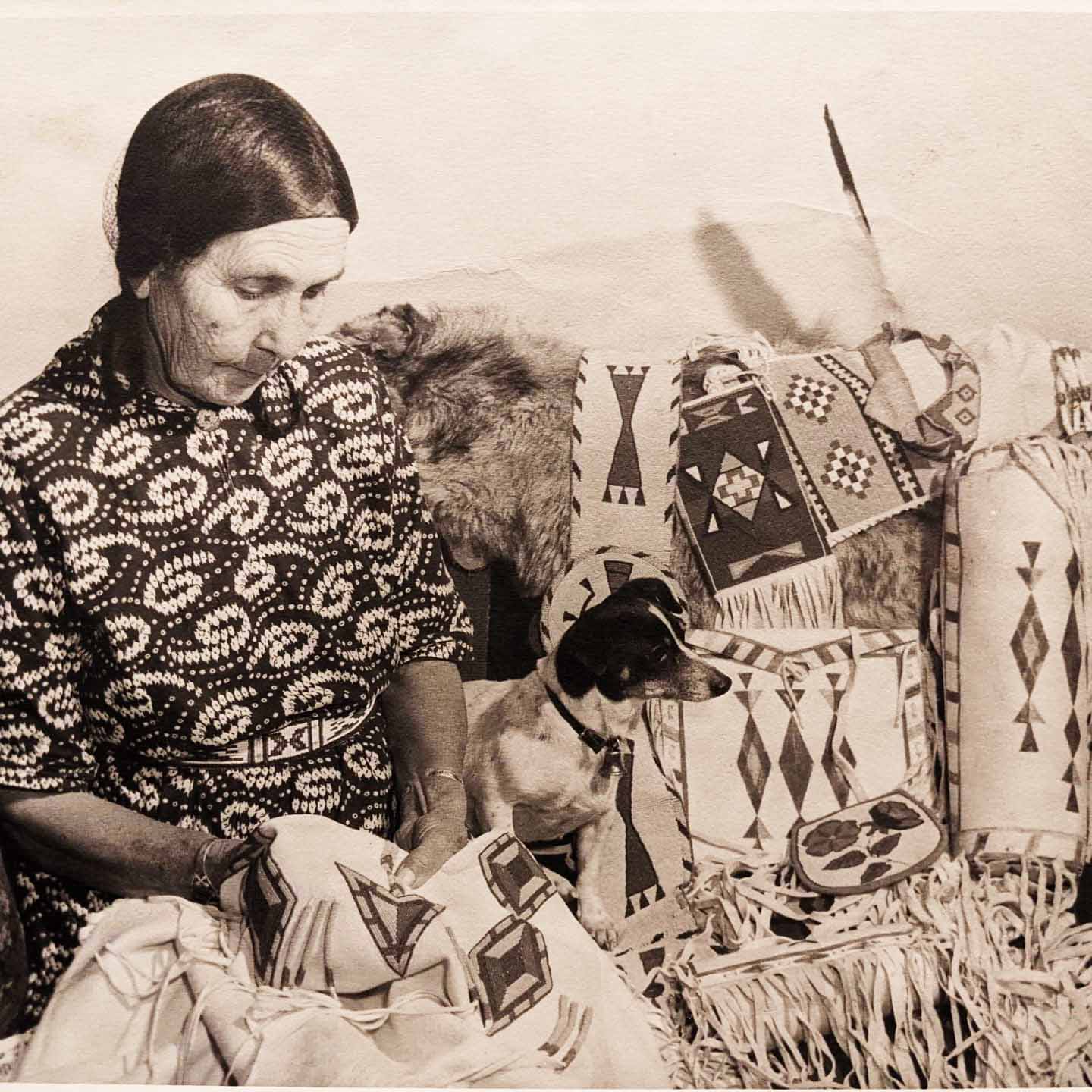
Rosie was an award-winning beadwork artist, and also made many traditional crafts, including parfleche, quillwork, buckskin items, among many other things. She was often called on to make special items for visiting dignitaries to Kainai First Nation. Several of her pieces are in museums across North America.
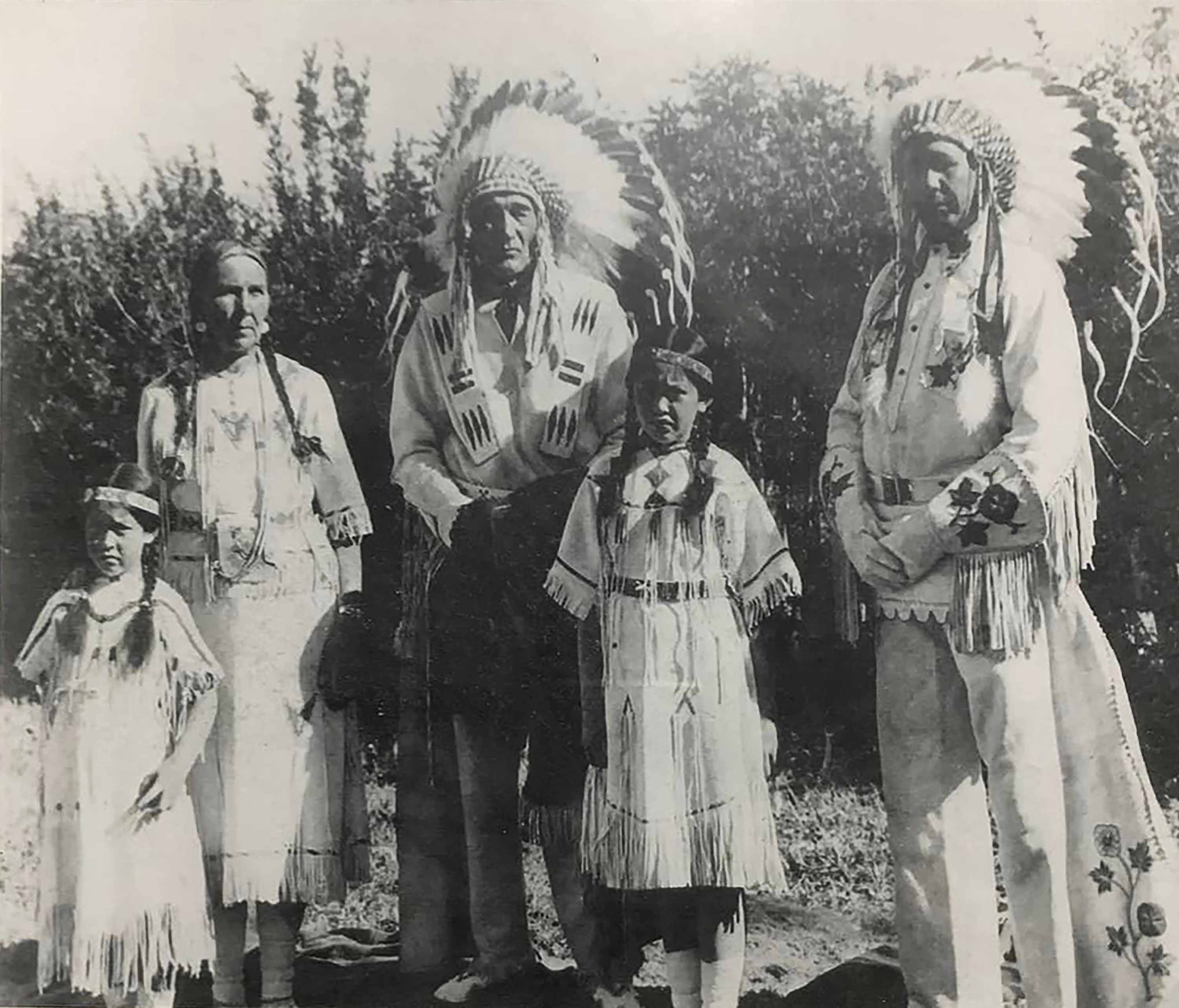
My great-great grandparents were true movers and shakers in Alberta history. Here they are pictured with an honorary (non-Native) chief of our tribe, along with their granddaughters. Charlie was a staunch Blackfoot traditionalist, and Rosie was a Blackfoot woman who mastered walking in both worlds as a translator for the RCMP, avid beadworker, knowledge keeper, and head of the women's society. Both Charlie and Rosie were the children of Trading Post owners and managers at Fort Whoop Up and Fort Macleod, respectively. They are both also descendants of prominent Blackfoot chiefs.
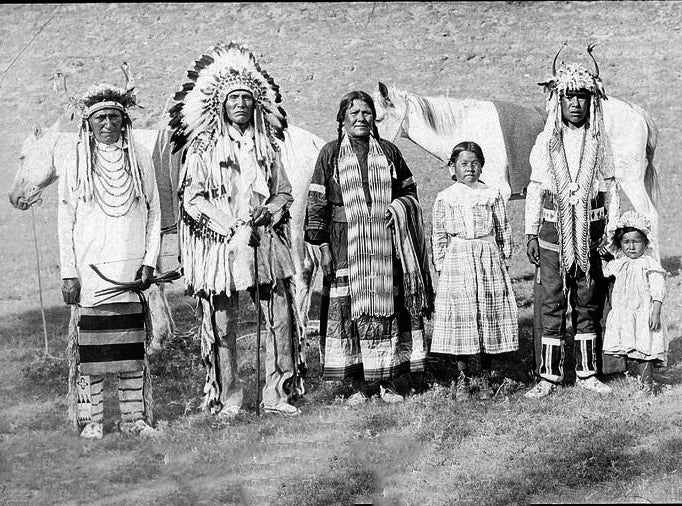
Double Gun Woman (aka Mary Iron Pipe) was the daughter of Chief Iron Pipe, and the mother of Rosie Davis. Here, she and her second husband, Joe Healy (aka Wolf Moccasin), are posed with their children in Lethbridge, AB near Fort Whoop Up. Joe Healy was an interpreter for Head Chief Red Crow, and was one of the only Blackfoot men of his age group who spoke English. Joe and Double Gun Woman went on to have a large family, which now includes over 3,000 descendants scattered across Canada, the United States, and other parts of the globe.